In 2025, the Independence Hub project has advanced its mission to strengthen the digital inclusion and practical resilience of Ukrainian refugees living in the Netherlands, Poland, and across the European Union. Through a combination of digital tools, multilingual resources, and collaborative capacity-building activities, we support displaced Ukrainians to navigate complex legal, educational, healthcare, and employment systems, and to lay the foundation for long-term stability and belonging in European host societies.
Project Objectives
The core objectives of the project remain central to all activities:
- Support Ukrainian refugees in understanding and adapting to the cultural, social, and legal landscapes of the Netherlands and Poland, fostering social integration and a sense of belonging.
- Provide practical, accessible information on essential aspects of daily life in host countries, including housing, healthcare, legal rights, education, and employment.
- Improve employability and career prospects for Ukrainians in the EU.
- Equip refugees with guidance to manage key domains of daily life effectively.
- Reduce administrative and workload pressures on social workers and local authorities by offering easily accessible digital support solutions.
Key Achievements in 2025
Throughout 2025, the Independence Hub partnership delivered significant progress on both strategic development and implementation fronts:
1. Strategic Collaboration
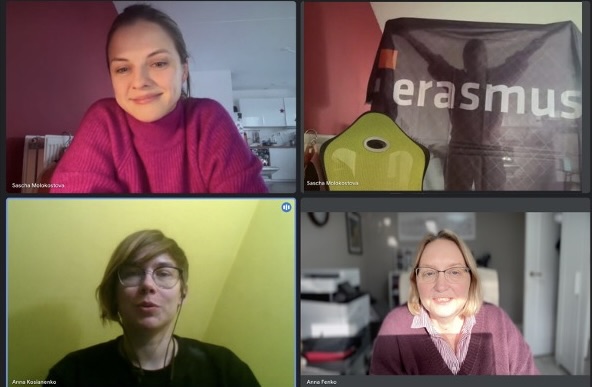
- Partners held 9 online project coordination meetings to ensure seamless implementation of project deliverables and effective collaboration across geographical locations.
- In addition, we organised a Transnational Project Meeting (TPM) in Amsterdam to evaluate progress, align on next phases, and coordinate upcoming activities.
2. Development and Publication of Multilingual Manual
- A comprehensive practical manual for displaced people living in Poland and the Netherlands was developed and published on the project website. The manual is available in five languages: Ukrainian, English, Polish, Dutch, and Russian (approximately 30% of Ukrainians consider Russian their first language). Providing resources in both Ukrainian and Russian therefore enhances accessibility and ensures that linguistic diversity among displaced populations is respected.
3. AI-Driven Chatbot for Practical Support
- We developed and launched an AI-driven chatbot tool capable of responding to user questions in all five languages (Ukrainian, English, Polish, Dutch, and Russian).
- The chatbot offers real-time guidance on practical, legal, and financial questions faced by Ukrainians residing in the EU, covering topics such as temporary protection rights, healthcare access, housing support, employment registration, and social services.
4. Workshop development
- In 2025, the partnership initiated content design for an extensive series of online workshops to be delivered in the Netherlands and Poland.
- These workshops are oriented toward:
- Supporting displaced Ukrainians in understanding key transition processes tied to living in host countries.
- Providing tools and practical strategies for social workers, case managers, and frontline support professionals.
- Preparing participants for potential future transitions, including the planned expiration of temporary protection status in March 2027 and the need for sustainable, long-term solutions such as return-preparation, career planning, and community integration.
Next Steps
As we move toward 2026, the Independence Hub project will expand its on-the-ground presence across the Netherlands and Poland through targeted workshop roll-outs and continued digital resource development. Our goal remains to bridge information gaps, strengthen social inclusion, and enhance the long-term self-sufficiency of displaced Ukrainians and supporting the professionals and institutions who work on their behalf.
We look forward to sharing further updates on workshop outcomes, user engagement metrics, and user-generated feedback that will inform the final project phase leading up to 2027.